(Subscriber Bonus: AI prompt and Worksheet below)
Two weeks ago, you figured out what to take off your plate.
You ran the exercise. You found the work draining you, the tasks you're not great at and don't enjoy, and you got ready to hand them off. Good. That's the first move toward freedom.
Then comes the part where delegation usually falls apart. You hand the work to someone, and it comes back wrong. Or late. Or not at all. And you quietly take it back, telling yourself it's faster to just do it.
The problem usually isn't the work. It's the seat.
Back to Basics: a seat is not a person
Coach Wooden built his teams around roles before he worried about any individual player. Position first, person second.
Here's the fundamental most leaders skip. You can't delegate a responsibility until someone actually owns the seat it belongs to. Not “helps with it.” Owns it. And you can't know if they own it until the seat itself is clear.
Most delegation fails not because the person is wrong, but because nobody ever defined what the seat is responsible for. You handed off a task without handing off the ownership. That's not delegation. That's borrowing someone's hands for an afternoon.
When we were building our remodel company
Early on, I had a wonderful person in the wrong seat.
She was capable, well liked, and worked hard. I kept handing her things, and they kept not quite landing. For a while I assumed the problem was her. It wasn't. The problem was that I'd never defined the seat. I'd just been piling tasks onto a good person and hoping the pile added up to a role.
When we finally got clear on what the seat actually owned, two things happened. Some of those responsibilities were a beautiful fit, and she thrived. And some clearly belonged in a different seat entirely. The work hadn't changed. The clarity had.
Nobody was failing. The seat had just never been drawn.
The order that matters
If you run on EOS, you know the Accountability Chart. If you don't, the thinking still works. Define the seat in this order, and the order matters.
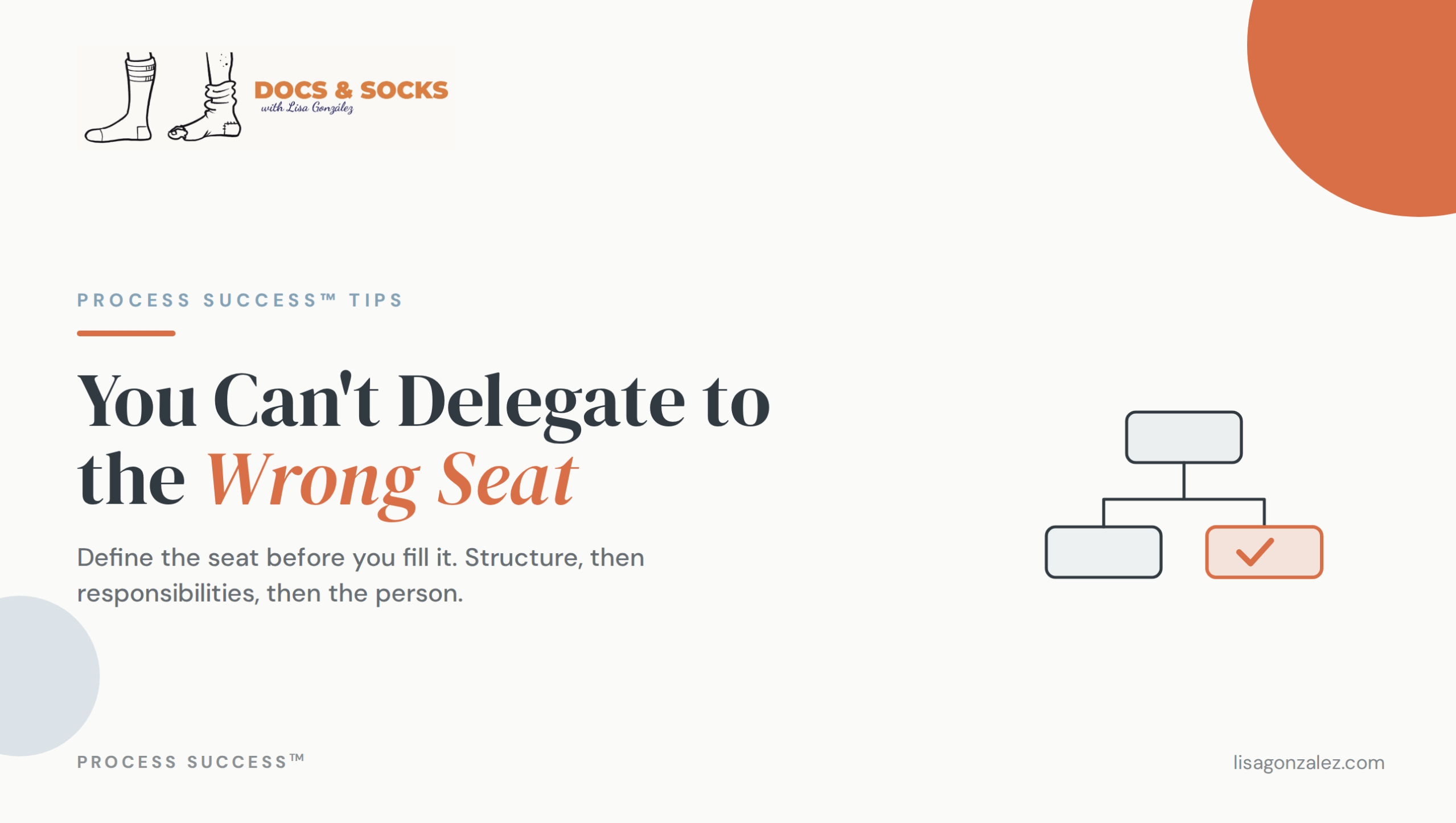
First, structure. Where does this seat sit? Who does it report to, and who reports to it? A seat floating with no place in the structure can't own anything.
Second, the five major responsibilities. Not ten. Five clean outcomes this seat is accountable for. If you need ten lines, you probably have two seats wearing one hat.
Third, and only third, the person. Do they get it, want it, and have the capacity to do it well? EOS calls this GWC, Get it, Want it, Capacity.
That order is the whole game. Most leaders start with the person, decide they're the problem, and reshuffle people endlessly while the real issue, an undefined seat, never gets fixed. Define the seat first. Then you can finally see whether the right person is in it.
A prompt to map a seat
I want to define one seat in my business clearly before I judge whether the right person is in it.
Walk me through it in this exact order, one step at a time. First, structure: where the seat sits, who it reports to, who reports to it. Second, the five major responsibilities, no more than five, written as outcomes the seat owns. Third, only after the seat is clear, help me assess whether the current person gets it, wants it, and has the capacity for it.
Hold me to the order. Don't let me jump to judging the person before the seat is defined. Keep it plain and practical.
The order is the trick. You can't fairly evaluate a person against a seat you've never drawn. If you want to dive in deeper on this work, reach and and I'm happy to connect you with an EOS Implementer in your area!
The Worksheet
I built you one-page Who Owns What sheet that walks a single seat through all three steps: structure, five responsibilities, then the GWC check, in that order. It's attached below. Use it on the one seat that's been giving you the most trouble -- or your own!
Knowing what to delegate was step one. Building seats people can actually own is what makes the delegation stick.
Process creates freedom and freedom needs somewhere to land.
Define the seat this week. Just one. The one that keeps bouncing back to you. Add it to your Issues List and discuss it with your leadership team.
Next Steps
If you found value in this content, please forward this to one leader who’s still the operating system of their business and hopefully it can help them out as well. They can subscribe to Docs & Socks here.
Lisa
When a template or worksheet isn't enough, we can help. Visit lisagonzalez.com for more free tools, or to explore coaching and workshops for you and your team.